Quick answer
Wegovy (semaglutide) is FDA-approved for chronic weight management in adults with obesity or overweight plus a weight-related condition. Mounjaro (tirzepatide) is FDA-approved only for type 2 diabetes. They are different molecules made by different companies — semaglutide is a single GLP-1 agonist from Novo Nordisk, tirzepatide is a dual GIP/GLP-1 agonist from Eli Lilly. If your goal is weight loss without a diabetes diagnosis, Wegovy is the on-label option. The on-label tirzepatide alternative for weight loss is Zepbound, not Mounjaro.
Both drugs work in broadly similar ways — they activate gut hormone receptors that reduce appetite and slow stomach emptying. Both produce meaningful weight loss in clinical trials. Both are weekly injections delivered with a pre-filled pen. But the regulatory label, the insurance treatment, and the active ingredient are all different, and those differences are what determine which drug you can actually get and what you will pay.
Section 02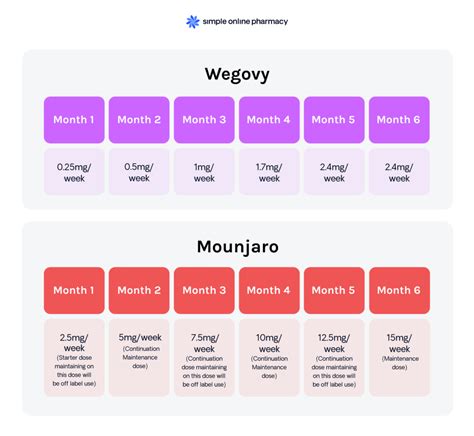
Side-by-side comparison table
The numbers below come from the FDA prescribing information for each drug and from the STEP and SURMOUNT clinical trial programs. Pricing reflects U.S. retail and manufacturer self-pay channels as of April 2026.
| Wegovy | Mounjaro | |
|---|---|---|
| Brand name | Wegovy | Mounjaro |
| Active ingredient | semaglutide | tirzepatide |
| Drug class | GLP-1 receptor agonist | GIP/GLP-1 dual agonist |
| FDA indication | Chronic weight management | Type 2 diabetes (not FDA-approved for weight loss) |
| How it’s taken | Subcutaneous injection, once weekly | Subcutaneous injection, once weekly |
| Maximum dose | 2.4 mg weekly | 15 mg weekly |
| Average weight loss | 14.9% body weight at 68 weeks (STEP 1 trial) | Not a primary endpoint; substantial weight loss observed in trials |
| FDA approval | 2021 | 2022 |
| List price | $1349/mo retail, $499/mo NovoCare cash pay | ~$1069/mo retail |
The single most important row in that table is FDA indication. Wegovy says "chronic weight management." Mounjaro says "type 2 diabetes." That single line determines who can be prescribed each drug, which insurance plans will cover it, what the prior authorization paperwork looks like, and what the manufacturer can legally market it for. Everything else in the comparison flows downstream from that one regulatory fact.
Section 03The key difference: FDA indication (weight loss vs diabetes)
When the FDA approves a drug, it approves a specific use — called the indication — based on the clinical trials the manufacturer submitted. That indication appears on the official prescribing information and is the only use the manufacturer can promote.
Wegovy was approved in June 2021 with an indication for chronic weight management in adults with a body mass index of 30 or higher, or 27 or higher with at least one weight-related condition (type 2 diabetes, hypertension, dyslipidemia, sleep apnea, or cardiovascular disease). Novo Nordisk submitted the STEP clinical trial program — five large trials specifically designed to measure weight loss as the primary outcome — to support that indication. In 2024, Wegovy received an additional indication for reducing major adverse cardiovascular events in adults with obesity and established cardiovascular disease.
Mounjaro was approved in May 2022 with an indication for improving glycemic control in adults with type 2 diabetes, as an adjunct to diet and exercise. Eli Lilly submitted the SURPASS clinical trial program, which measured A1C (a blood sugar marker) as the primary outcome. Weight loss was a secondary observation in those trials, not what the drug was approved for. The Mounjaro label does not include weight management as an indication.
A pharmacist filling a Mounjaro prescription cannot ask why you are taking it, but the insurance plan adjudicating the claim can — and will. Most plans require either a diagnosis code for type 2 diabetes (E11.x in ICD-10) or recent lab values such as an A1C above 6.5% before approving Mounjaro coverage. Without those, the claim is denied and you pay the retail price out of pocket.
Wegovy faces a different obstacle: many insurance plans, Medicare Part D, and most state Medicaid programs historically excluded weight loss medications from coverage entirely. That has been shifting since 2024 — Medicare now covers Wegovy for the cardiovascular indication in eligible patients — but coverage for pure weight management is still patchy. The good news is that Novo Nordisk introduced a $499/month direct cash-pay channel through NovoCare Pharmacy, which removes the insurance question entirely for self-pay patients.
Section 04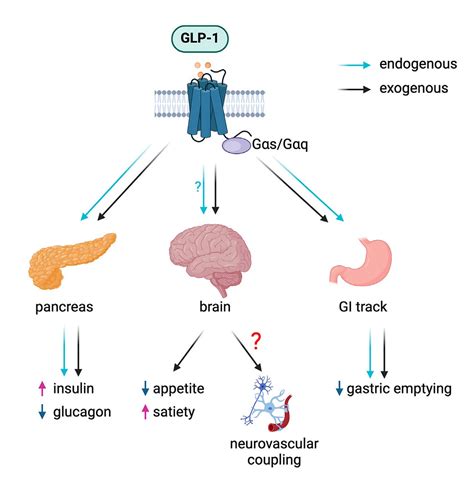
Different active ingredients: semaglutide vs tirzepatide
Wegovy contains semaglutide. Mounjaro contains tirzepatide. They belong to overlapping but distinct drug classes.
Semaglutide (Wegovy)
Semaglutide is a long-acting glucagon-like peptide-1 (GLP-1) receptor agonist. It is a synthetic version of a single gut hormone — GLP-1 — that the small intestine releases after a meal. By activating GLP-1 receptors in the brain, gut, and pancreas, semaglutide reduces appetite, slows gastric emptying, and improves insulin secretion in response to glucose. The molecule was engineered with a fatty acid chain that allows it to bind to albumin in the blood, extending its half-life to about a week and enabling once-weekly dosing.
Tirzepatide (Mounjaro)
Tirzepatide is a dual agonist — a single peptide that activates both the GLP-1 receptor and the GIP (glucose-dependent insulinotropic polypeptide) receptor. GIP is another gut hormone that influences insulin secretion and energy storage. By targeting two receptors at once, tirzepatide produces somewhat different effects on glucose control and body weight than a pure GLP-1 agonist. In trial data, the dual mechanism appears to translate into greater average weight loss at the highest doses, though side effect profiles are similar.
| Property | Semaglutide (Wegovy) | Tirzepatide (Mounjaro) |
|---|---|---|
| Drug class | GLP-1 receptor agonist | GIP/GLP-1 dual receptor agonist |
| Hormone receptors targeted | 1 (GLP-1 only) | 2 (GIP and GLP-1) |
| Half-life | ~7 days | ~5 days |
| Dosing frequency | Once weekly | Once weekly |
| Maximum dose | 2.4 mg weekly | 15 mg weekly |
| FDA approval (year) | 2021 (Wegovy for weight loss) | 2022 (Mounjaro for diabetes) |
| Manufacturer | Novo Nordisk (Denmark) | Eli Lilly (United States) |
The dose numbers are not directly comparable because they refer to different molecules — 2.4 mg of semaglutide is not the same as 2.4 mg of tirzepatide. Each drug has its own titration schedule starting from a very low dose to minimize gastrointestinal side effects, then stepping up over several months to a maintenance dose.
Section 05Mounjaro for weight loss: the off-label situation
A doctor in the United States can legally prescribe an approved drug for any indication they consider medically appropriate, even if that use is not on the FDA label. This is called off-label prescribing and it is common practice. Some clinicians do prescribe Mounjaro off-label for weight loss in patients without type 2 diabetes, particularly when Zepbound is in shortage or when a patient already has a Mounjaro prescription that is being covered.
The situation is essentially identical to Ozempic prescribed off-label for weight loss. The drug works whether or not the patient has diabetes — tirzepatide reduces appetite and produces weight loss regardless of glucose status — but the regulatory and reimbursement framework is built around the on-label use.
The practical problems with off-label Mounjaro for weight loss in 2026:
- Insurance denial. Almost every commercial plan requires a documented type 2 diabetes diagnosis before paying for Mounjaro. Without it, the claim is denied and the patient pays roughly $1,069/month retail.
- Manufacturer position. Eli Lilly explicitly markets Zepbound as its weight-loss product and Mounjaro as its diabetes product. The Lilly Direct self-pay program offers tirzepatide at a lower cash price under the Zepbound label, not Mounjaro.
- Supply allocation. When tirzepatide demand exceeds supply, Lilly has historically prioritized diabetes patients on Mounjaro over off-label weight loss users.
- Documentation friction. Pharmacies may flag off-label fills for additional review, and prior authorization paperwork often requires diabetes-specific lab values.
If you want tirzepatide for weight loss, the FDA-approved path is Zepbound, not Mounjaro. Same molecule, same manufacturer, same clinical effects, but with a label and a self-pay program designed for weight management. See our Wegovy vs Zepbound comparison.
Mounjaro vs Zepbound (briefly)
This is the part that confuses almost everyone. Mounjaro and Zepbound are the same drug. They contain the identical active ingredient — tirzepatide — in identical doses, manufactured by the same company in the same facilities. Eli Lilly sells the same molecule under two brand names because each name has its own FDA approval for a different indication.
- Mounjaro — tirzepatide approved for type 2 diabetes (May 2022).
- Zepbound — tirzepatide approved for chronic weight management (November 2023).
A pharmacy cannot dispense Mounjaro when the prescription says Zepbound, or vice versa. They are listed as separate products with separate NDC codes. Insurance plans treat them as completely different medications, with different formulary tiers and prior authorization rules. The list price of Mounjaro is around $1,069/month, and Zepbound is around $1,086/month. Lilly Direct offers Zepbound at a self-pay price as low as $349-$499/month for certain doses, which is generally cheaper than retail Mounjaro for off-label use.
For a deeper comparison of semaglutide versus tirzepatide on the weight-loss-approved side, see the dedicated Wegovy vs Zepbound guide.
Section 07Effectiveness comparison
Direct head-to-head trials of semaglutide versus tirzepatide are limited, but the SURMOUNT-5 trial published in 2025 compared maximum tolerated doses of tirzepatide (Zepbound) and semaglutide (Wegovy) over 72 weeks in adults with obesity. The result: tirzepatide produced significantly more weight loss on average. For Mounjaro specifically — which has not been tested for weight loss as a primary endpoint — the available data comes from the SURPASS diabetes trials, where weight loss was a secondary outcome.
| Trial | Drug / dose | Population | Average weight loss |
|---|---|---|---|
| STEP 1 | Semaglutide 2.4 mg (Wegovy) | Adults with obesity, no diabetes | 14.9% at 68 weeks |
| SURMOUNT-1 | Tirzepatide 15 mg (Zepbound) | Adults with obesity, no diabetes | 20.9% at 72 weeks |
| SURMOUNT-5 (head-to-head) | Tirzepatide vs semaglutide, max doses | Adults with obesity, no diabetes | ~20% (tirzepatide) vs ~14% (semaglutide) |
| SURPASS-2 | Tirzepatide 15 mg (Mounjaro) | Adults with type 2 diabetes | ~12 kg (secondary endpoint) |
Two important caveats. First, these are averages. Individual response varies a lot — some patients on Wegovy lose 20% or more of their body weight, and some on tirzepatide lose less than 5%. Second, the Mounjaro-specific data comes from diabetes trials, where patients tend to lose less weight than non-diabetic patients on the same drug, partly because diabetes itself affects weight regulation.
The headline: tirzepatide produces more weight loss than semaglutide on average, but this matters most for the FDA-approved tirzepatide product (Zepbound), not for off-label Mounjaro use.
Section 08Side effects: Wegovy vs Mounjaro
Both drugs share the gastrointestinal side effect profile common to all GLP-1 and GIP/GLP-1 agonists. The most common complaints by far are nausea, diarrhea, vomiting, and constipation, especially during the dose escalation period in the first 16-20 weeks. Most are mild to moderate and most resolve as the body adjusts.
| Side effect | Wegovy (semaglutide) | Mounjaro (tirzepatide) |
|---|---|---|
| Nausea | ~44% of patients | ~22-31% of patients |
| Diarrhea | ~30% | ~17-23% |
| Vomiting | ~24% | ~10-13% |
| Constipation | ~24% | ~7-11% |
| Abdominal pain | ~20% | ~5-10% |
| Pancreatitis (rare) | Reported, <1% | Reported, <1% |
| Gallbladder problems | Reported | Reported |
| Boxed warning | Thyroid C-cell tumors (rodent data) | Thyroid C-cell tumors (rodent data) |
The percentages are not directly comparable across trials because they come from different patient populations and dosing schedules — Wegovy STEP 1 enrolled non-diabetic adults with obesity, while Mounjaro SURPASS trials enrolled patients with type 2 diabetes. In the SURMOUNT-5 head-to-head trial, both drugs caused similar overall rates of GI side effects, with tirzepatide showing slightly more nausea at the highest dose.
Both drugs carry the same boxed warning for the risk of thyroid C-cell tumors observed in rodent studies. Both are contraindicated in patients with a personal or family history of medullary thyroid carcinoma or multiple endocrine neoplasia syndrome type 2 (MEN 2). For a full breakdown of semaglutide-specific side effects, see the Wegovy side effects guide.
Severe abdominal pain radiating to the back (possible pancreatitis), persistent vomiting and dehydration, yellowing of the skin or eyes, severe upper-right abdominal pain (possible gallbladder issue), a new lump in the neck, hoarseness, or difficulty swallowing — for either drug.
Cost and insurance differences
This is where the FDA label difference shows up most concretely. The retail prices are similar, but the insurance pathways and self-pay options are completely different.
| Pricing channel | Wegovy | Mounjaro |
|---|---|---|
| Retail list price | ~$1,349/month | ~$1,069/month |
| Manufacturer self-pay | $499/month (NovoCare) | No self-pay program for off-label use |
| Commercial insurance (with coverage) | $0-$25/month with savings card | $25-$100/month for diabetes patients |
| Medicare Part D | Covered for cardiovascular indication (since 2024) | Covered for type 2 diabetes |
| Medicaid | Varies by state; expanding | Covered for type 2 diabetes in most states |
| Coverage for weight loss without diabetes | Yes (it is the on-label use) | Almost never approved |
The bottom-line implication: if you have type 2 diabetes, Mounjaro is usually cheaper because insurance covers it. If you do not have type 2 diabetes and your goal is weight loss, Wegovy is usually cheaper because the $499 NovoCare cash-pay program is available without insurance, while Mounjaro will be billed at retail. We cover the full breakdown in the Wegovy cost guide.
Section 10Which is right for you
Use the simple decision tree below. It is not a substitute for a medical evaluation, but it covers the most common situations.
| Your situation | On-label option | Why |
|---|---|---|
| Type 2 diabetes, no significant weight concerns | Mounjaro | FDA-approved for diabetes, well-covered by insurance, A1C improvement is the goal. |
| Type 2 diabetes plus obesity | Either Mounjaro or Wegovy (or Zepbound) | All three are options. Mounjaro and Wegovy may both be covered. Discuss with your doctor. |
| Obesity (BMI ≥30), no diabetes | Wegovy or Zepbound | Both are FDA-approved for weight loss. Mounjaro is not. |
| Overweight (BMI ≥27) plus a weight-related condition | Wegovy or Zepbound | Both are FDA-approved at this BMI threshold with comorbidities. |
| Established cardiovascular disease and obesity | Wegovy | FDA-approved in 2024 to reduce major cardiovascular events. |
| History of medullary thyroid carcinoma or MEN 2 | Neither | Both drugs are contraindicated. |
The clearest cases are the bookends: pure type 2 diabetes management points to Mounjaro, pure weight management without diabetes points to Wegovy or Zepbound. The middle case — adults with both diabetes and obesity — is the one most worth discussing with a clinician, because all three drugs may be on the table and the right answer depends on insurance, prior medications, A1C, and personal preference.
Want to compare Wegovy against more options? See the all-GLP-1s comparison page for a side-by-side of Wegovy, Zepbound, Mounjaro, Ozempic, and Saxenda.
Frequently Asked Questions
What is the main difference between Wegovy and Mounjaro?
Wegovy (semaglutide) is FDA-approved specifically for chronic weight management. Mounjaro (tirzepatide) is FDA-approved only for type 2 diabetes — it is not approved for weight loss. The two drugs also contain different active ingredients: semaglutide is a single GLP-1 receptor agonist, while tirzepatide is a dual GIP/GLP-1 receptor agonist. Even when used for the same goal, the FDA labels are not the same.
Is Mounjaro better than Wegovy for weight loss?
In clinical trials, tirzepatide (the active ingredient in Mounjaro) produced more weight loss than semaglutide on average — roughly 20.9% body weight at 72 weeks in SURMOUNT-1 versus 14.9% with semaglutide in STEP 1. However, Mounjaro itself is not FDA-approved for weight loss. The FDA-approved tirzepatide product for weight management is Zepbound, which is the same molecule made by the same manufacturer (Eli Lilly).
Can I get Mounjaro for weight loss?
Some providers prescribe Mounjaro off-label for weight loss in patients without type 2 diabetes, similar to how Ozempic is sometimes prescribed off-label. However, insurance plans almost always deny Mounjaro for any non-diabetes use, and Eli Lilly markets Zepbound — the same tirzepatide molecule — as the FDA-approved option for weight management. If your goal is weight loss, Wegovy or Zepbound is the on-label path.
Are Wegovy and Mounjaro the same drug?
No. Wegovy contains semaglutide, a GLP-1 receptor agonist made by Novo Nordisk. Mounjaro contains tirzepatide, a dual GIP/GLP-1 receptor agonist made by Eli Lilly. They are different molecules from different manufacturers and target different hormone receptors.
Wegovy vs Mounjaro side effects — which is worse?
Both drugs have similar gastrointestinal side effect profiles: nausea, diarrhea, vomiting, constipation, and abdominal pain are very common with both. In head-to-head trial data and SURMOUNT-5, tirzepatide produced slightly higher rates of nausea and diarrhea at the highest dose, but discontinuation rates were similar. Both carry a boxed warning for thyroid C-cell tumors based on rodent studies.
How much does Mounjaro cost compared to Wegovy?
Mounjaro retails for about $1,069 per month, while Wegovy retails for about $1,349 per month. With insurance for type 2 diabetes, Mounjaro is often well covered and the out-of-pocket cost can be very low. For weight loss, Mounjaro is rarely covered. Wegovy has a NovoCare cash-pay price of $499/month for self-pay patients, which is generally lower than retail Mounjaro and does not require a diabetes diagnosis.
Will insurance cover Mounjaro for weight loss?
In most cases, no. Because Mounjaro is FDA-approved only for type 2 diabetes, commercial and government insurance plans generally require a diabetes diagnosis and supporting lab values (such as an A1C of 6.5% or higher) before approving coverage. Off-label prescribing for weight loss is almost always denied. Patients seeking insurance-covered weight loss treatment with tirzepatide typically need a Zepbound prescription instead.
Mounjaro vs Zepbound — what is the difference?
Mounjaro and Zepbound contain the exact same active ingredient — tirzepatide — at the same doses, made by the same company (Eli Lilly). The only meaningful difference is the FDA label: Mounjaro is approved for type 2 diabetes, Zepbound is approved for chronic weight management. Pharmacies cannot substitute one for the other, and insurance treats them very differently.
Can I switch from Mounjaro to Wegovy?
Yes, with a new prescription from your provider. There is no direct dose conversion because the drugs are different molecules. Most providers restart titration from a low Wegovy dose (0.25 mg weekly) and step up over 16-20 weeks, regardless of the Mounjaro dose you were on. Talk to your prescriber before making any switch and do not stop or start GLP-1 medications on your own.
Is Wegovy or Mounjaro safer long-term?
Both drugs are intended for long-term use and both have similar known risks: pancreatitis, gallbladder disease, kidney injury from dehydration, and a boxed warning for thyroid tumors. Semaglutide has been on the U.S. market longer (since 2017 as Ozempic, 2021 as Wegovy) so it has a longer real-world safety record. Tirzepatide was approved in 2022. Long-term cardiovascular outcomes data is also more mature for semaglutide.