The most common Wegovy side effects are gastrointestinal: nausea (44%), diarrhea (30%), vomiting (24%), constipation (24%), abdominal pain (20%), and headache (14%). Most are mild or moderate and peak in the first week after each dose increase. Serious side effects — pancreatitis, gallbladder problems, kidney injury — are uncommon but require immediate medical attention.
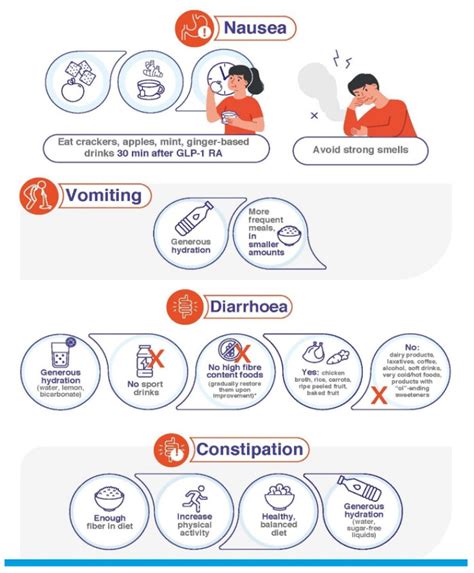
Side effects by frequency
These numbers come from the STEP 1, STEP 4, and STEP 8 clinical trials and the official Wegovy prescribing information. "Very common" means more than 10% of patients experienced it; "common" is 1-10%; "uncommon" is less than 1%. Rates are cumulative over the 68-week study period, not month-to-month.
Very common (more than 10% of patients)
| Side effect | STEP 1 rate (2.4 mg) | Placebo rate |
|---|---|---|
| Nausea | 44% | 16% |
| Diarrhea | 30% | 16% |
| Vomiting | 24% | 6% |
| Constipation | 24% | 11% |
| Abdominal pain | 20% | 10% |
| Headache | 14% | 10% |
| Fatigue | 11% | 4% |
| Dyspepsia (indigestion) | 9% | 3% |
| Dizziness | 8% | 4% |
| Injection site reactions | 11% | 7% |
Common (1-10% of patients)
- Belching and flatulence — related to slowed gastric emptying
- Gastroesophageal reflux (heartburn)
- Hair loss (~3%) — typically diffuse thinning from rapid weight loss
- Gallbladder disorders including cholelithiasis (gallstones)
- Hypoglycemia in people also taking insulin or sulfonylureas
- Lipase elevation (lab value, not always symptomatic)
- Increased heart rate (typically 1-3 bpm above baseline)
Uncommon (less than 1% of patients)
- Acute pancreatitis — ~0.2% in STEP 1
- Acute kidney injury — usually from dehydration due to vomiting/diarrhea
- Diabetic retinopathy complications — only in people with pre-existing diabetes
- Hypersensitivity reactions — rash, anaphylaxis in rare cases
- Gastroparesis-like symptoms — severely delayed gastric emptying
- Suicidal ideation — reported in post-marketing; no causal link established by FDA as of 2024 review
Boxed warning
In rodent studies, semaglutide caused a dose-dependent increase in thyroid C-cell tumors. It is unknown whether this applies to humans. Wegovy is contraindicated in people with a personal or family history of medullary thyroid carcinoma (MTC) or multiple endocrine neoplasia syndrome type 2 (MEN 2). Report any neck lump, hoarseness, difficulty swallowing, or persistent throat discomfort to your provider promptly.
Timeline: when side effects start and stop
The intensity of Wegovy side effects is not constant. They flare after each dose increase and then fade. Understanding this rhythm helps you plan around them.
Day 1-3 after a new dose
Peak symptoms for most people. Nausea is usually strongest on the day of injection and the day after. Appetite suppression kicks in within 24 hours. Some patients feel "food aversion" — a mild disgust at the thought of eating, especially rich or greasy food. If you vomit on day 1, it is often a response to overeating before the drug has had time to signal fullness.
Day 4-7
Symptoms begin to settle. Constipation may become more noticeable around day 3-5 as gastric emptying stays slowed. Fatigue may be present if you have been eating much less than usual.
Weeks 2-4 (same dose)
Most patients adapt. Nausea becomes rare or mild. Appetite suppression remains. Constipation may persist and usually responds to fiber, water, and over-the-counter stool softeners.
The next dose increase
When you step up from 0.25 → 0.5 → 1.0 → 1.7 → 2.4 mg, you can expect a flare of nausea and GI symptoms for about a week. This is normal. If it is intolerable, your provider can hold you at the current dose for another month before escalating.
At maintenance (2.4 mg)
Most side effects diminish substantially. The STEP 4 trial showed that after 20 weeks on maintenance dose, only a minority of patients still had active GI symptoms, and the severity was mostly mild.
How to manage the common ones
Nausea
- Eat smaller meals, more frequently. Stop at 70% full.
- Avoid greasy, fried, very spicy, or very sweet foods in the first week after a dose increase.
- Drink fluids between meals, not with them. Ginger tea, peppermint, or cold water help some people.
- Stay upright for 30 minutes after eating.
- Inject on a day when you can rest if you are not sure how you will feel — many patients choose Friday or Saturday.
- Ask your provider about a short-term anti-nausea medication (ondansetron) for the worst days.
Constipation
- Increase soluble fiber gradually (psyllium, oats, chia, beans). Too much too fast worsens gas.
- Aim for at least 2 liters of water per day.
- Magnesium citrate at bedtime is a common and well-tolerated stool softener.
- Walk for 20-30 minutes daily. Gentle movement accelerates gut transit.
- Osmotic laxatives (MiraLAX) are safe for occasional use; consult your provider for regular use.
Diarrhea
- Cut back on sugar alcohols, caffeine, and very high-fiber foods temporarily.
- Replace fluids and electrolytes — low-sugar rehydration drinks are better than plain water.
- If diarrhea is severe or lasts more than 48 hours, call your provider. Dehydration increases the risk of kidney injury.
Fatigue
- Check your calorie intake — most people under-eat dramatically in the first weeks.
- Prioritize protein (aim for 1.2-1.6 g per kg of body weight per day).
- Do not skip meals, even if not hungry.
- Get labs checked — iron, B12, and vitamin D deficiencies can present as fatigue.
Hair loss
Usually begins 2-4 months in, peaks around month 6, and resolves after weight stabilizes. Not a reason to stop treatment for most people. Supportive measures: adequate protein, biotin (optional, modest evidence), iron if deficient, gentle hair care.
Wegovy and alcohol
Wegovy does not interact directly with alcohol in the pharmacological sense, but many patients find their tolerance drops dramatically. Reasons:
- Slowed gastric emptying changes how quickly alcohol enters the bloodstream, making intoxication more unpredictable.
- Alcohol is an appetite stimulant that can override the satiety effect, causing "hangxiety" and rebound nausea.
- Alcohol is a pancreatic irritant, compounding the small baseline risk of pancreatitis.
- Many Wegovy users spontaneously report reduced cravings for alcohol — an effect under active clinical investigation for alcohol use disorder.
Practical advice: if you drink, start with less than you normally would, eat first, hydrate aggressively, and avoid drinking in the 24 hours after an injection.
When to call a doctor immediately
Pancreatitis: severe, persistent abdominal pain, often radiating to the back, usually with nausea and vomiting. Worsens with eating.
Gallbladder attack: pain under the right ribcage, especially after fatty meals, sometimes with jaundice (yellow skin/eyes).
Allergic reaction: difficulty breathing, swelling of face/lips/tongue, severe rash, rapid heartbeat.
Thyroid symptoms: neck lump, hoarseness that doesn't resolve, difficulty swallowing.
Severe dehydration: persistent vomiting or diarrhea, dark urine, confusion, dizziness on standing.
Vision changes in people with diabetes: sudden blurry vision, floaters.
Who should not take Wegovy
- Personal or family history of medullary thyroid carcinoma (MTC)
- Multiple endocrine neoplasia syndrome type 2 (MEN 2)
- Known hypersensitivity to semaglutide or any excipient
- Pregnancy or planning pregnancy (stop at least 2 months before)
- Breastfeeding
- Type 1 diabetes (not indicated; use with caution)
- History of acute pancreatitis (case-by-case with specialist)
- Severe gastroparesis (pre-existing)
Frequently Asked Questions
What are the worst side effects of Wegovy?
The most serious potential side effects of Wegovy are rare but include acute pancreatitis (severe abdominal pain radiating to the back), gallbladder disease, acute kidney injury from dehydration caused by vomiting or diarrhea, severe allergic reactions, and diabetic retinopathy complications in people with pre-existing diabetes. Wegovy also carries a boxed warning for thyroid C-cell tumors based on rodent studies; the human risk is unknown but the drug is contraindicated in anyone with a personal or family history of medullary thyroid carcinoma or multiple endocrine neoplasia type 2.
How long do Wegovy side effects last?
Most gastrointestinal side effects — nausea, diarrhea, constipation, reflux — are mild to moderate and resolve within a few days to a few weeks. They are most intense during the first week after a dose increase and typically fade as your body adjusts. For most patients they settle down significantly after the titration period (the first 4-5 months). A small percentage of people continue to experience mild nausea throughout maintenance.
Does Wegovy cause hair loss?
Hair loss was reported by about 3% of Wegovy users in clinical trials, compared to 1% in the placebo group. It is generally diffuse thinning (telogen effluvium) rather than patchy loss, and is thought to be triggered by the rapid weight loss itself rather than a direct drug effect. Most cases resolve after weight loss stabilizes. Ensuring adequate protein intake (at least 60-80 g per day) and checking iron, vitamin D, and zinc levels may help.
Does Wegovy make you tired?
Fatigue was reported in about 11% of people taking Wegovy in clinical trials, compared to 4% on placebo. It is most common during dose escalation and usually improves within weeks. Common causes include reduced calorie intake (especially carbohydrates), mild dehydration from GI symptoms, and low blood sugar in people also taking diabetes medications. Staying hydrated, eating small balanced meals, and prioritizing sleep usually help.
When do Wegovy side effects start?
Most people notice mild GI symptoms within 1 to 3 days of their first injection. Nausea tends to peak in the first week after a dose increase and then gradually improves. Because the drug has a half-life of about a week, some patients feel worse on the day of injection or the day after, then better through the rest of the week. Side effects often flare up again briefly each time the dose is escalated during the titration schedule.
Can you drink alcohol on Wegovy?
There is no absolute prohibition, but most providers recommend limiting alcohol on Wegovy for several reasons. Semaglutide slows gastric emptying, which can make alcohol absorption unpredictable and intensify intoxication and hangovers. Alcohol can also worsen nausea, acid reflux, and dehydration — side effects that Wegovy can already cause. It may also irritate the pancreas, and pancreatitis is a rare but serious Wegovy side effect. Many Wegovy users actually report reduced alcohol cravings as a surprise benefit, a phenomenon under active clinical investigation.
Is Wegovy safe long term?
As of 2026, the longest published clinical trial data covers about two years of continuous use. The SELECT cardiovascular outcomes trial followed more than 17,000 patients on semaglutide for up to five years and showed a 20% reduction in major adverse cardiovascular events without new safety signals. Real-world post-marketing surveillance since 2021 has not identified unexpected long-term risks, though regulatory agencies continue to monitor rare events such as gastroparesis, suicidal ideation (not confirmed to be caused by the drug), and vision changes in diabetics.
Does Wegovy cause sulfur burps?
Yes — sulfur-smelling burps (dysgeusia and eructation) are a known but uncommon side effect of GLP-1 medications including Wegovy. They are caused by delayed gastric emptying that allows food to linger in the stomach longer, producing hydrogen sulfide gas during partial digestion. They are not dangerous and can often be reduced by eating smaller meals, avoiding high-sulfur foods (eggs, broccoli, garlic, red meat), staying upright for 30 minutes after eating, and limiting fatty or spicy foods during the first weeks after each dose increase.
What should I do if I miss a Wegovy dose?
If you miss a dose and your next scheduled dose is more than 48 hours away, take the missed dose as soon as you remember. If your next scheduled dose is less than 48 hours away, skip the missed dose and take your next dose on the regular day. Never take two doses at the same time to "catch up". If you miss doses for more than two weeks, contact your provider — you may need to restart at a lower dose to avoid intensified side effects.
Does Wegovy cause pancreatitis?
Pancreatitis is listed in the Wegovy prescribing information as an uncommon but serious side effect. In clinical trials, acute pancreatitis occurred in about 0.2% of Wegovy users, which is similar to the background rate in the general population. Post-marketing reports have identified cases, so the FDA-required label warns providers to watch for it. Severe, persistent abdominal pain — especially pain that radiates to the back, may be accompanied by nausea and vomiting, and worsens with eating — warrants immediate medical attention.
Why does Wegovy cause facial changes ("Wegovy face")?
"Wegovy face" refers to the loss of facial volume and increased wrinkling that some people notice with rapid weight loss. It is not a direct drug effect — it is the normal consequence of losing subcutaneous fat in the cheeks and temples, which happens with any significant weight loss. Slower weight loss (staying on lower doses longer), adequate protein intake to preserve muscle, resistance training, and good hydration can all help minimize the appearance. For some people, dermatology treatments may be appropriate once weight stabilizes.
Can Wegovy cause thyroid cancer?
The FDA label carries a boxed warning based on rodent studies in which semaglutide caused thyroid C-cell tumors. It is unknown whether this translates to humans, and large clinical trials have not shown an increased rate of thyroid cancer in people taking semaglutide. As a precaution, Wegovy is contraindicated in anyone with a personal or family history of medullary thyroid carcinoma (MTC) or multiple endocrine neoplasia syndrome type 2 (MEN 2). Patients should report any neck lump, hoarseness, difficulty swallowing, or persistent throat discomfort.
Are there side effects specific to women?
There are no Wegovy side effects that occur exclusively in women, but several are reported more often by female patients: hair loss (thought to be related to rapid weight loss rather than a hormonal effect), changes to the menstrual cycle (usually improvements in cycles disrupted by polycystic ovary syndrome), and reduced effectiveness of oral contraceptives in the first weeks after a dose increase due to delayed gastric absorption. Wegovy should not be used during pregnancy or breastfeeding. Women who could become pregnant should use reliable contraception and stop Wegovy at least two months before a planned pregnancy.