Quick answer: how to inject Wegovy
To inject Wegovy: take the pen out of the fridge 15 to 30 minutes early, wash your hands, choose a clean spot on your abdomen, thigh, or upper arm, and wipe it with an alcohol swab. Pull the cap off, press the yellow shield flat against your skin at 90 degrees, and push firmly. You will hear a first click when the injection starts. Hold for 5 to 10 seconds until you hear a second click and the dose window reads zero. Lift the pen straight off and drop it into a sharps container. Total active time: under one minute.
The Wegovy injection looks intimidating in the box, but the pen does almost everything for you. There is no syringe to fill, no air bubble to flick out, no dose to measure, and no needle you ever have to see. You press a button-shaped device against your skin, wait for two clicks, and walk away. The hardest part is usually the mental rehearsal before injection number one — and that fades by week three for almost everyone.
This guide is written for adults using the standard Wegovy single-dose pen at home. It is not a substitute for the printed Instructions for Use that come in your carton, the in-person training your prescribing provider may offer, or the manufacturer's video at wegovy.com. If anything in this article contradicts your provider, follow your provider.
Chapter 02What you need (supplies checklist)
Everything except the sharps container ships with your prescription, but it helps to have it laid out before you start. A clean, flat surface — kitchen counter, bathroom vanity, desk — makes the whole thing feel less clinical and more routine.
- One Wegovy pen at the correct dose strength for this week. Double-check the label before you uncap it.
- One alcohol swab (single-use, pre-packaged). Pharmacies sell them in boxes of 100 for a few dollars.
- A cotton ball or small gauze square for the rare drop of blood after the needle comes out.
- An FDA-cleared sharps disposal container. A red, puncture-resistant plastic container with a one-way lid. Available at any pharmacy, online, or sometimes free from county health departments.
- Clean, dry hands — soap and warm water for 20 seconds is enough.
- A simple log — a notes app, calendar, or paper journal. You will record the date, dose, and site each week so you can rotate properly.
Each Wegovy pen is single-patient use, even if you change the needle (which you can't on the current pen). Sharing risks transmitting bloodborne infections including hepatitis B, hepatitis C, and HIV. Pens prescribed to one person should never, under any circumstance, be used by another person — including a spouse with the same prescription.
Step-by-step injection instructions
Run through the sequence in order. Most patients get to where they can do the whole thing in under three minutes by week three or four. If you are nervous, read the steps out loud as you do them — it slows you down and makes it harder to skip a step.
- Warm the pen. Take it out of the refrigerator and set it on the counter for 15 to 30 minutes. A cold injection stings; a room-temperature one barely registers. Do not microwave, run under hot water, or sit on a heater — heat can damage the semaglutide.
- Wash your hands with soap and warm water for 20 seconds. Dry on a clean towel. Skip hand sanitizer if possible — alcohol residue can mix with the swab and irritate the skin.
- Inspect the pen. Check the label: name (Wegovy), dose, expiration date. Look through the inspection window — the liquid should be clear and colorless to slightly yellow. If it is cloudy, has particles, has been frozen, or the pen looks damaged, do not use it. Call the pharmacy for a replacement.
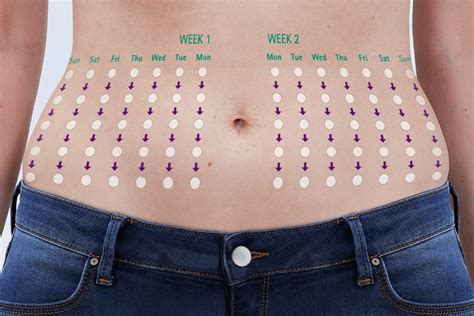
- Pick a site. Choose your abdomen (at least two inches away from the navel), the front of one thigh, or the back of one upper arm if someone else is injecting. Avoid skin that is bruised, scarred, hard, swollen, tattooed, or sunburned.
- Clean the skin. Wipe the chosen spot in a small circle with the alcohol swab. Let it air dry completely — about 15 seconds. Injecting through wet alcohol stings.
- Pull off the pen cap. Pull straight up. Do not twist. Set the cap aside. You will see a yellow needle shield — the needle is still hidden inside.
- Position the pen. Hold it so you can see the dose window. Place the flat yellow shield squarely against your skin at a 90-degree angle, like a stamp.
- Press firmly to start. Push the pen straight down into your skin. You will hear a first click — that means the injection has begun. Keep pressing.
- Hold for 5 to 10 seconds. Continue pressing the pen against your skin. Watch the gray plunger in the dose window slide down. You will hear a second click when the full dose has been delivered and the gray bar should be at the bottom of the window.
- Lift the pen straight off. Pull the pen straight up and away from your skin. The yellow safety shield will lock over the needle automatically — you cannot stick yourself.
- Press, do not rub. If you see a drop of blood, press the cotton ball or gauze gently for 10 to 20 seconds. Rubbing the site bruises the tissue and is the number one cause of "Wegovy bruises" people complain about online.
- Drop the pen into the sharps container. Whole, uncapped, no fiddling with the needle. Snap the sharps container shut. Wash your hands.
- Log it. Record the date, dose, and site (e.g. "April 6 · 1.0 mg · upper-left abdomen") so you can rotate next week.
That is the full sequence. If anything goes wrong mid-injection — the pen slips, you flinch, you lift early — read the troubleshooting section near the bottom of this page before re-injecting.
Chapter 04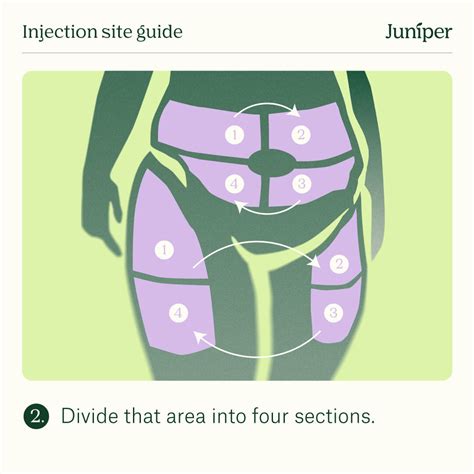
Wegovy injection sites: stomach, thigh, upper arm
The FDA-approved Wegovy injection sites are the abdomen, the front of the thigh, and the back of the upper arm. All three deliver the same dose — semaglutide is absorbed equally well from each. The choice is mostly about access, comfort, and rotation.
Abdomen (stomach)
The most popular Wegovy injection site. The skin is loose, the fat layer is generous on most adults, and you can see exactly what you are doing. Use any spot at least two inches away from your navel in any direction. You can use the upper-left, upper-right, lower-left, and lower-right quadrants on rotating weeks. Avoid the waistband area where clothing rubs.
Front of the thigh
A solid alternative if your abdomen is sore, scarred, or just feels off-limits. The Wegovy injection site on the thigh is the upper-outer area, roughly halfway between hip and knee. Sit down, pinch up a small fold of skin, and inject straight in. Some patients find the thigh slightly more sensitive than the abdomen because muscle is closer to the surface.
Back of the upper arm
The least convenient site for self-injection because you cannot see or reach it well. If a partner, family member, or caregiver is injecting for you, the back of the upper arm (the triceps area) is a comfortable spot with a good fat layer.
Rotation schedule
Rotating sites is not optional. Repeatedly injecting the same patch of tissue causes lipohypertrophy (a fatty lump), scar tissue, and slower drug absorption. A simple weekly rotation across the four abdominal quadrants and the two thighs gives the tissue 6 weeks to recover before being used again.
| Week | Site | Notes |
|---|---|---|
| Week 1 | Upper-left abdomen | 2+ inches from navel |
| Week 2 | Upper-right abdomen | 2+ inches from navel |
| Week 3 | Lower-left abdomen | Above the waistband |
| Week 4 | Lower-right abdomen | Above the waistband |
| Week 5 | Front of left thigh | Upper-outer area |
| Week 6 | Front of right thigh | Upper-outer area |
| Week 7 | Back to upper-left abdomen | Restart cycle |
You can substitute the upper arm for any of the thigh weeks if a partner is helping. The point is: never inject within one inch of last week's spot. Keep your log so you do not have to remember.
Chapter 05How to read the dose on the pen and what the clicks mean
One of the most-searched questions is how to calculate the Wegovy dose by clicks. Short answer: you do not. Wegovy is a single-dose, pre-filled pen — the dose is fixed at the factory and cannot be changed. Each pen delivers exactly one weekly dose: 0.25 mg, 0.5 mg, 1.0 mg, 1.7 mg, or 2.4 mg, depending on which titration step you are on. Click counting is a feature of multi-dose pens like Ozempic or Saxenda, not Wegovy.
The clicks you hear on the Wegovy pen are mechanical confirmations, not dose indicators:
- First click: the injection has started. You should still feel the pen pressing against your skin.
- Second click: the full dose has been delivered. The gray plunger in the dose window has reached the bottom and you can lift the pen.
The dose window on the side of the pen is a small viewing strip. Before injection it shows the gray plunger near the top and the medication below it. As you press, the plunger slides down. When the gray bar fills the visible window, the dose is complete. If the bar does not move all the way down, hold the pen against your skin for a few more seconds — it occasionally takes longer with a colder pen.
For the full titration schedule (which dose you should be on each month), see our Wegovy dosing guide. It also covers what to do if you miss a dose or need to restart after a gap.
A small number of patients still have older Wegovy pens with a dose dial. Those work differently — you turn the dial to the dose number and press the button. If your pen has a dial instead of a flat yellow shield, follow the printed Instructions for Use that came with it, or call the pharmacy for clarification. The current US-market pen is single-dose and has no dial.
Storage: refrigeration, room temperature, and travel
Wegovy is a peptide drug, which means it is sensitive to heat, light, and freezing. The storage rules look fussy in print but they boil down to "keep it in the fridge in its box, take it out 30 minutes before injecting, and never freeze it."
| Condition | Temperature | Maximum time |
|---|---|---|
| Refrigerated (preferred) | 36°F to 46°F (2°C to 8°C) | Until expiration date on box |
| Room temperature | Up to 86°F (30°C) | 6 weeks total — then discard |
| Freezing | Below 36°F (2°C) | Never. Discard if frozen, even if thawed. |
| Direct sunlight or heat | Above 86°F (30°C) | Never. Discard if exposed. |
| Storage container | Original carton | Always — protects from light |
Where to keep it in the fridge
The middle shelf, away from the back wall (which can drop close to freezing) and away from the door (where temperatures swing every time someone opens it). Inside the original carton.
Traveling with Wegovy
For trips of any length, use an insulated medication travel case with a reusable cool pack — not loose ice cubes, which can drop the temperature into the freezing range. For trips up to 6 weeks, you do not technically need to refrigerate at all (room temperature is allowed), but most travelers prefer the insulated pouch as insurance against hot cars and beach bags.
- Always carry-on, never checked. Cargo holds can freeze. TSA allows medications and a small sharps container in carry-on luggage.
- Bring documentation. A copy of your prescription and the pharmacy label. Most security checks are quick, but international travel sometimes triggers extra screening.
- Hotel mini-fridges are usually fine but check the temperature — some are too cold and can freeze the pen.
- Plan around your dose day. If you can, inject the day before you leave so you do not have to inject mid-trip with limited supplies.
What to do with the used pen (sharps disposal)
Used Wegovy pens are medical sharps. They must go into an FDA-cleared sharps disposal container — never the household trash, recycling, or a soda bottle. Improper disposal is a public health and sanitation worker safety issue, and in many states it is illegal.
What counts as a sharps container
A rigid, puncture-resistant plastic container with a tight-fitting, one-way lid that prevents items from falling out. Pharmacies sell them for $5 to $20. Some county health departments and waste-management programs offer them free. A sturdy laundry detergent bottle is a last-resort substitute in emergencies but not a long-term solution.
How to use it
- Drop the entire used pen in immediately after injection. Cap off, needle still attached.
- Never recap a needle, never bend or break it, never try to remove the needle from the pen.
- Keep the container upright, out of reach of children and pets.
- Stop filling at the "fill line" — usually three-quarters full.
Where to dispose of a full container
Disposal rules vary by state and county. Common options include:
- Pharmacy take-back programs — many CVS, Walgreens, and independent pharmacies accept full sharps containers, often free.
- Hospital and clinic drop-off — your prescribing clinic or local hospital may accept them.
- County household hazardous waste programs — search "[your county] sharps disposal" for the nearest drop-off.
- Mail-back services — buy a sharps container that comes with a prepaid mail-back box. Convenient for rural areas.
The FDA maintains a directory of safe disposal sites at fda.gov. SafeNeedleDisposal.org also lists state-by-state options.
Chapter 08What if the injection hurts, bleeds, or bruises
Mild discomfort, a tiny drop of blood, and the occasional small bruise are all normal and harmless. They are also avoidable with a few small adjustments.
When the Wegovy shot hurts more than expected
Most pain complaints trace back to one of these four causes:
- Cold pen. Cold semaglutide stings as it goes in. Let the pen sit out for 15 to 30 minutes first.
- Wet alcohol. Alcohol that has not fully evaporated stings the moment the needle hits it. Let it air dry for 15 seconds.
- Tense muscles. If you brace, the needle hits resistance. Take a slow breath out as you press the pen down.
- Reused site. Injecting into tissue that has not recovered from last week increases pain and bruising. Rotate.
If it bleeds
Press a cotton ball or gauze gently against the spot for 10 to 20 seconds. Do not rub. A drop or two is normal and usually means the needle nicked a tiny capillary. Heavier bleeding is rare and usually points to an injection too close to a visible vein.
If it bruises
Bruises happen. They are more common in people on blood thinners (including aspirin and fish oil), in older adults, and at thigh sites. Rotating sites, letting the pen warm up, pressing instead of rubbing, and keeping a steady 90-degree angle all reduce bruising. Bruises typically fade in 5 to 10 days.
If a hard lump forms
A small, soft welt right after injection is a normal tissue reaction and usually settles in a few hours. A hard, persistent lump that does not go away within a few weeks may be lipohypertrophy from repeated injections in the same spot. Stop using that area entirely until it resolves and call your provider if it stays for more than a month.
Heat denatures peptide drugs. The only acceptable way to bring a Wegovy pen to room temperature is to set it on a counter for 15 to 30 minutes. Microwaving, running under hot tap water, sitting on a heater, or leaving in a sunny window can damage the semaglutide and reduce its effectiveness — even if the pen looks fine.
When to call your doctor about an injection
Most injection issues are minor and self-resolving. A small set of symptoms warrant a phone call to your prescribing provider — sooner rather than later.
- The dose did not deliver fully. The second click never came, or the gray plunger did not reach the bottom of the window. Do not re-inject. Call your provider for guidance on whether to take a partial replacement or wait for next week.
- You injected the wrong dose. You used a 2.4 mg pen instead of the 1.0 mg you were prescribed (or vice versa). Call your provider — overdoses can intensify GI side effects.
- Signs of infection at the site. Spreading redness, warmth, swelling, pus, or red streaks moving away from the site. Fever. Tenderness that worsens after 48 hours rather than improves.
- An allergic reaction. Hives anywhere on the body, lip or tongue swelling, throat tightness, wheezing, or difficulty breathing. Call 911 for severe reactions and use an epinephrine auto-injector if you have one.
- A hard lump that doesn't go away within 2 to 4 weeks.
- The pen broke, leaked, or was mishandled. Frozen, exposed to extreme heat, dropped hard, or visibly damaged. Do not inject — call the pharmacy for a replacement.
- You had a needlestick injury from someone else's used pen. Wash with soap and water and seek immediate medical attention.
For non-injection-related concerns — nausea, fatigue, hair loss, mood changes, or anything else after starting Wegovy — see our full Wegovy side effects guide. For pricing, savings cards, and how to keep the prescription affordable, see our Wegovy cost breakdown. To start a prescription from scratch, see where to buy Wegovy online.
Frequently Asked Questions
How do I inject Wegovy for the first time?
Take the pen out of the refrigerator 15 to 30 minutes early so it warms up. Wash your hands, choose a clean spot on your stomach, thigh, or upper arm, and wipe it with an alcohol swab. Pull the cap straight off the pen. Press the yellow needle shield flat against the skin at 90 degrees and push down firmly. Hold for 5 to 10 seconds — you will hear a first click when the injection starts and a second click when it finishes. Lift the pen straight off and drop it into a sharps container. The whole thing takes under a minute once you are set up.
Where is the best place to inject Wegovy?
There is no single best site — all three approved areas (abdomen, front of the thigh, back of the upper arm) deliver the same dose. The abdomen is the most popular because it is easy to see and pinch. The thigh is convenient if you sit down to inject. The upper arm requires another person to help. The most important thing is to rotate sites week to week so the same patch of tissue does not get repeated trauma.
Does the Wegovy injection hurt?
Most people describe it as a very brief sting or a small pinch, similar to a flu shot. The Wegovy needle is short and thin (8 mm, 31 gauge or finer in newer pens). Pain is usually worse when the medication is injected straight from the fridge, when the alcohol swab has not fully dried, when the same site is reused too soon, or when the injector is tense. Letting the pen warm up for 15 to 30 minutes makes the biggest difference.
Can you inject Wegovy cold straight from the fridge?
You can, but most patients find it noticeably more painful and the slow infusion can sting. Novo Nordisk does not require warming, but the prescribing information allows the pen to sit at room temperature for up to 6 weeks. Most clinicians recommend taking the pen out of the fridge 15 to 30 minutes before injecting so the liquid is closer to body temperature. Never warm the pen in a microwave, hot water, or direct sunlight.
How do I count the clicks on a Wegovy pen?
Wegovy is sold as a single-dose, pre-filled pen — there is no dial to turn and no clicks to count. Each pen is set at the factory to deliver one fixed weekly dose (0.25 mg, 0.5 mg, 1.0 mg, 1.7 mg, or 2.4 mg). The "clicks" you hear are mechanical: the first click confirms the injection has started and the second click confirms the dose is fully delivered. Click counting only applies to multi-dose pens like Ozempic, not to Wegovy.
Does Wegovy need to be refrigerated?
Yes, before first use Wegovy should be stored in the refrigerator at 36°F to 46°F (2°C to 8°C). It should not be frozen — a frozen pen must be discarded even if it thaws. Once a pen has been kept at room temperature, it can stay at up to 86°F (30°C) for up to 6 weeks total. Always keep it in the original carton, away from direct light and heat.
How long can Wegovy be out of the fridge?
Wegovy can be stored at room temperature, up to 86°F (30°C), for a maximum of 6 weeks (28 days for the older multi-dose pens). After that, the pen must be discarded even if it looks fine. Keep it in the carton to protect it from light. If the pen has been exposed to temperatures above 86°F, in direct sunlight, or to freezing, throw it away.
How do I travel with Wegovy?
For trips up to 6 weeks, you can simply carry the pen at room temperature in its original carton. For longer trips or hot climates, use an insulated medication travel pouch with a reusable gel pack — not loose ice, which can freeze the pen. Always pack Wegovy in your carry-on, never checked luggage (cargo holds can freeze). Bring a copy of your prescription and the pharmacy label in case TSA or customs asks. Most airlines and the TSA allow injectable medications and a small sharps container in carry-on.
How do I dispose of used Wegovy pens?
Drop the entire used pen, with the cap off and needle still attached, into an FDA-cleared sharps disposal container immediately after use. Never put a used pen in the household trash, the recycling bin, or a soda bottle. When the sharps container is three-quarters full, follow your community guidelines for disposal — many pharmacies, hospitals, and county hazardous waste programs accept full sharps containers. The CDC and FDA both maintain online directories of safe disposal sites.
What if my Wegovy injection bleeds or bruises?
A small drop of blood or a light bruise at the injection site is common and harmless. Press the spot gently with a cotton ball or gauze for 10 to 20 seconds — do not rub, which makes bruising worse. Bruises usually fade within a week. To reduce the chance of bruising, rotate sites, let the alcohol fully dry before injecting, avoid injecting near visible veins, and inject slowly and steadily. Call your provider if you see significant bleeding, a hard lump that does not go away, redness that spreads, or signs of infection.
Can I inject Wegovy in the same spot every week?
No. You can use the same general area (abdomen, thigh, or upper arm) but you should move at least one inch from the previous injection point each week. Repeated injections in the exact same spot can cause lipohypertrophy (a fatty lump under the skin), bruising, or scar tissue, all of which can affect how the medication is absorbed. A simple way to rotate is to imagine a clock face on your abdomen and move clockwise each week.
What happens if I inject into a muscle by mistake?
Wegovy is meant to go into the fat layer just below the skin (subcutaneous tissue), not muscle. If you inject too deep and hit muscle, the dose will still work, but it may sting more, bruise more, and absorb slightly faster. To avoid it, use the front of the thigh or the soft area of the abdomen, pinch the skin gently if you are very lean, and press the pen flat at 90 degrees rather than at an angle. People with very little body fat may need a shorter needle or guidance from a nurse for the first few injections.
What should I do if the pen does not click or the dose window does not move?
If you do not hear the second click or the dose window does not return to zero, the full dose may not have been delivered. Do not inject yourself a second time to "make up" the dose — call your prescribing provider or the Novo Nordisk patient support line for instructions. Common causes are lifting the pen too early, not pressing firmly enough against the skin, or a defective pen. Save the pen so the manufacturer can investigate if needed.